
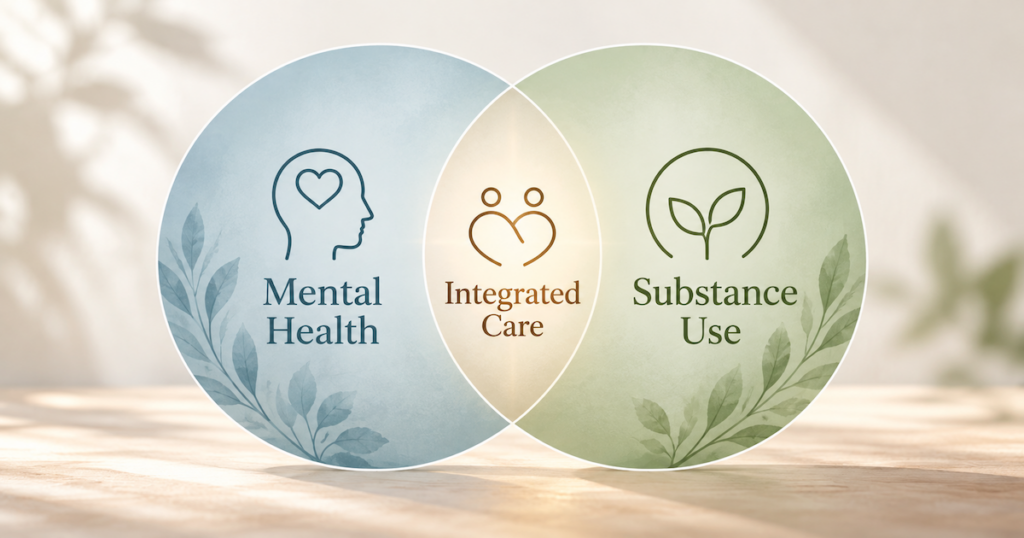
Substance use rarely develops in a vacuum. Alcohol or drugs may become a way to manage anxiety, depression, trauma, grief, sleep problems, perfectionism, or chronic stress. Over time, substance use can also intensify those same symptoms. Dual diagnosis treatment recognizes that when both concerns are present, they should be understood and addressed together.
A dual diagnosis does not refer to one specific combination of conditions. It means that a person is experiencing a substance use disorder alongside a mental health disorder or clinically significant mental health symptoms. Examples may include alcohol use and depression, stimulant use and anxiety, opioid use and post-traumatic stress, or cannabis use connected to sleep and emotional regulation.
Without integrated care, treatment can become fragmented. A person may be told to stop using substances before discussing trauma, while another provider may focus on anxiety without fully understanding the role of alcohol or drugs. The client is then left trying to connect two treatment plans that may not communicate with each other.
Dual diagnosis treatment looks at how the concerns interact. A clinician may explore whether anxiety tends to appear before use, after use, or both. Therapy can address the beliefs, triggers, relationships, and routines that reinforce the cycle. Medication management may be considered when appropriate, and the treatment team can coordinate mental health and recovery goals instead of treating them as competing priorities.
Integrated care may include:
- Screening for substance use and mental health symptoms
- Individual and group therapy
- Trauma-informed treatment when clinically appropriate
- Skills for emotional regulation, stress, sleep, and relationships
- Medication evaluation or coordination
- Relapse-prevention planning that includes mental health warning signs
This approach matters because removing a substance does not automatically remove the reason it became appealing. If someone has relied on alcohol to quiet racing thoughts every night, recovery requires more than avoiding alcohol. The person needs healthier ways to understand and manage the anxiety, as well as support during the period when old coping patterns are no longer available.
At Welwynn, dual diagnosis care is integrated from the beginning. The outpatient model is designed for adults and professionals who may be managing substance use alongside anxiety, depression, trauma, or chronic stress while still carrying significant responsibilities. The goal is not to assign labels for their own sake. It is to create a treatment plan that reflects the whole person.
A person does not need a confirmed psychiatric diagnosis before reaching out. A confidential assessment can help clarify the symptoms, the role substance use is playing, and whether coordinated outpatient treatment is appropriate. Addressing both sides of the cycle can create a more stable foundation for recovery than expecting either concern to improve on its own.